
Direct the settlement
Set priorities in real time and keep the settlement moving as people, resources, construction, and time interact. The world continues around each decision, making attention as important as expansion.
Begin with a settlement. Build a kingdom.
Empires is a real-time strategy, city-building, and kingdom-building game about turning a fragile beginning into a realm with a story of its own. Plan where people live and work, make choices about land and resources, and guide the settlement as its needs—and its ambitions—grow.
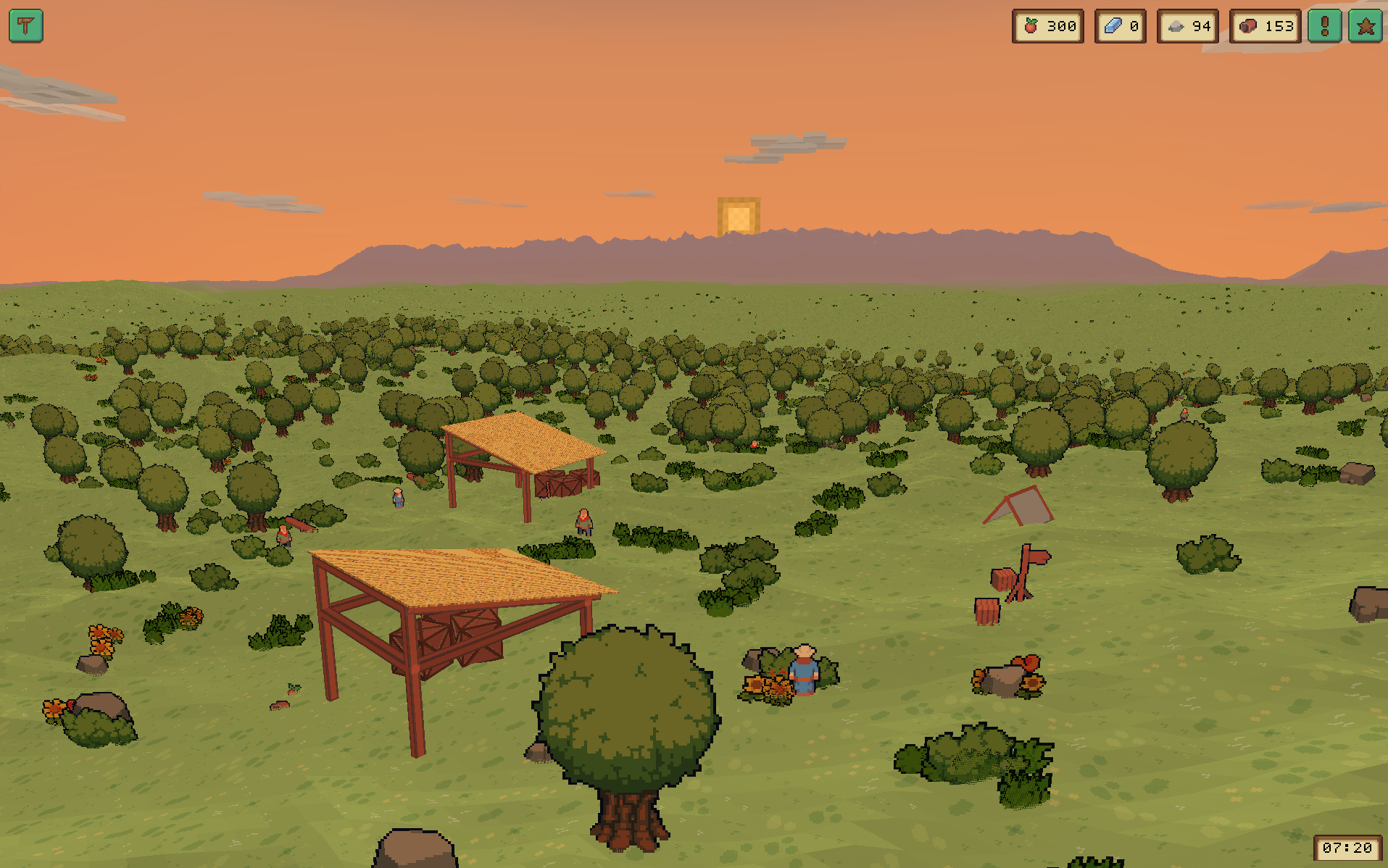
Every kingdom begins with a few people, a patch of land, and more work than hands to do it. In Empires, that beginning matters. The places you choose to settle, the resources you depend on, and the priorities you set all leave a mark on what follows.
The game brings the close attention of a city builder together with the wider decisions of real-time strategy. You can read the immediate life of the settlement—workers moving, supplies gathering, structures taking shape—while keeping an eye on the landscape that will define its future.
Growth is not only about making the numbers larger. It is about turning a collection of practical decisions into a place that feels inhabited, understandable, and distinctly yours.
Empires stays legible close to the ground while every decision points toward something larger.
Set priorities in real time and keep the settlement moving as people, resources, construction, and time interact. The world continues around each decision, making attention as important as expansion.
Place the structures and working spaces that turn open land into a functioning city. Read what the settlement needs now while leaving room for what it may become next.
Look beyond the next building. Terrain, distance, and the wider world give each settlement a larger context—and give every stage of growth somewhere meaningful to lead.
Empires has always depended on readability. A worker, a tree, a stone pile, or a half-built structure needs to make sense at a glance. That clarity comes from handcrafted pixel art: deliberate silhouettes, warm colors, and small details that remain legible while the settlement becomes busy.
The new world gives that art depth. Characters, vegetation, resources, and buildings inhabit rolling 3D ground beneath a changing sky. Water meets the land, mountains hold the horizon, and distance helps the player understand where a small settlement sits inside a much larger place.
We describe the result as 2.5D: not a flat game pretending to have depth, and not a conventional 3D world that has lost the character of its original art. It is a meeting point between the two—designed so the settlement stays readable while the landscape feels expansive.
Empires is still being built, tested, and shaped, but the direction of the game is now clear enough to share. We are preparing its Steam page so players can follow the project and add it to their wishlists.
The wishlist link will appear here as soon as the page is live. Until then, the development journal is the best place to see how the game reached its current form—and what we are working on next.
Visit the Empires journalEmpires began as a readable top-down settlement, moved through home-grown world tools and strict visual testing, briefly became a planet, and eventually found its identity in a wide 3D landscape. The journal follows that evolution and now looks deeper into the people, planning tools, and simulation systems turning the landscape into a living settlement.
Development story 03
How one painted boundary becomes connected plots, household claims, generated architecture, exact foundations, material deliveries, Builder labor, and persistent homes inside the live settlement.